
News / BKI Hosts Green Ship ...
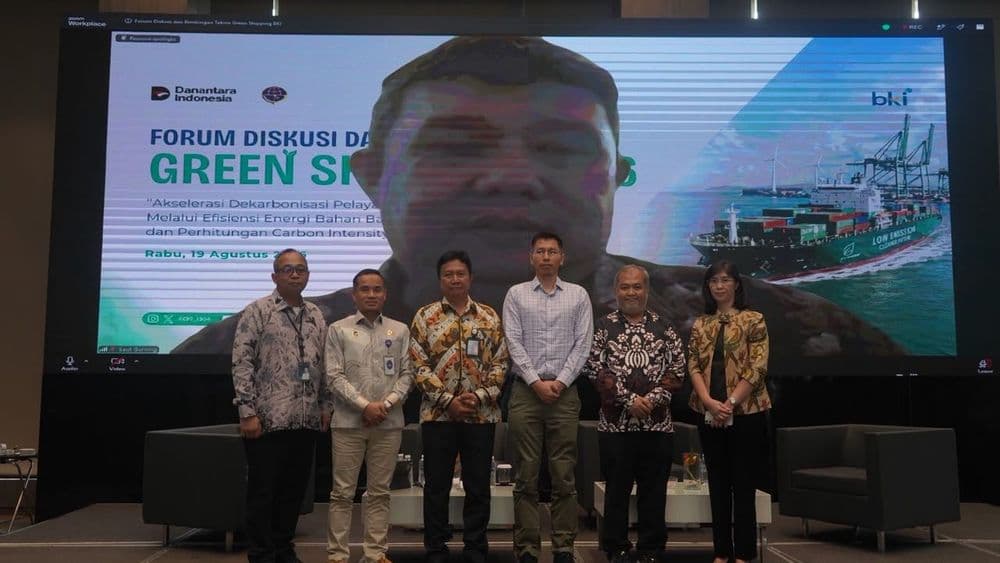
Jakarta, August 19, 2026 — PT Biro Klasifikasi Indonesia (Persero) (BKI) brought together maritime stakeholders to discuss practical pathways for reducing emissions from Indonesia’s domestic shipping sector through the Green Shipping 2026 Discussion Forum and Technical Guidance. Held at the Grand Mercure Kemayoran Hotel in Jakarta, the forum carried the theme “Accelerating the Decarbonisation of Indonesia’s Domestic Shipping through Energy Efficiency, Low-Carbon Fuels, and Carbon Intensity Indicator (CII) Calculation.”


The forum provided a platform for stakeholders to align perspectives, strengthen technical capabilities, and identify practical measures to advance the national shipping decarbonisation agenda. The discussion comes as international maritime policies continue to evolve, including the International Maritime Organization’s (IMO) Net-Zero Framework, increasing the need for the industry to strengthen its ability to understand, measure, and manage emissions.
Arief Budi Permana, Director of Classification Business Operations at BKI, said the transition to lower-emission shipping requires a phased approach that considers the readiness of fuels, technology, and supporting infrastructure.
“We view decarbonisation as a transitional spectrum. Biodiesel stands out as the most immediate option due to engine compatibility and relatively available infrastructure, while e-methanol represents a promising medium- to long-term choice with the potential for significantly greater well-to-wake emission reductions, even though its readiness in Indonesia is still at an early stage. This is where the role of classification becomes crucial—through the development of rules and class notations for alternative-fuel vessels, technical studies and risk assessments, as well as emissions verification within the CII, EEXI, and SEEMP frameworks—to ensure the transition proceeds safely and measurably,” said Arief.
He added that collaboration between policymakers and industry is essential to translating decarbonisation targets into practical measures.
“We hope today’s forum will serve as a space to bridge policy with industry needs, align technological readiness with energy readiness, and harmonise phased decarbonisation targets with practical implementation capabilities,” Arief said.
The forum also highlighted the importance of assessing emissions across the entire fuel lifecycle through a Life Cycle Assessment (LCA) approach. Rather than focusing solely on emissions generated during fuel consumption on board vessels, LCA considers emissions associated with fuel production, processing, distribution, and use.
This broader perspective is important when assessing low-carbon fuel options for domestic shipping. Fuels such as biodiesel, liquefied natural gas (LNG), methanol, and ammonia have different emissions profiles, levels of technological maturity, and supply chain readiness. Evaluating these factors objectively and using reliable data will be essential to developing an effective and sustainable energy transition strategy.
Energy efficiency was another key focus of the discussion. Improving energy efficiency can help reduce vessel emissions intensity, while a stronger understanding of the Carbon Intensity Indicator (CII) can enable operators to assess carbon efficiency, identify areas for improvement, and establish measurable performance targets.
The Green Shipping 2026 forum also contributes to the development of a phased decarbonisation roadmap for Indonesia’s domestic shipping sector. Establishing such a roadmap requires reliable industry data and robust calculation methodologies to support future policies, targets, and implementation strategies.
Through the forum, participants were encouraged to share operational experience, provide input on industry needs, and strengthen their understanding of key decarbonisation issues, including energy efficiency, low-carbon fuels, LCA, and CII implementation.
The forum is expected to generate several key outcomes, including stakeholder input, greater alignment on the direction of domestic shipping decarbonisation, enhanced technical capacity, and documented follow-up actions through the Minutes of Meeting (MoM).
By bringing together stakeholders across the maritime sector, BKI aims to support a coordinated and practical approach to decarbonisation. The initiative forms part of BKI’s broader commitment to helping Indonesia’s shipping industry prepare for a more efficient, lower-carbon, sustainable, and future-ready maritime transport system.