
News / BKI Advances Risk-Ba ...
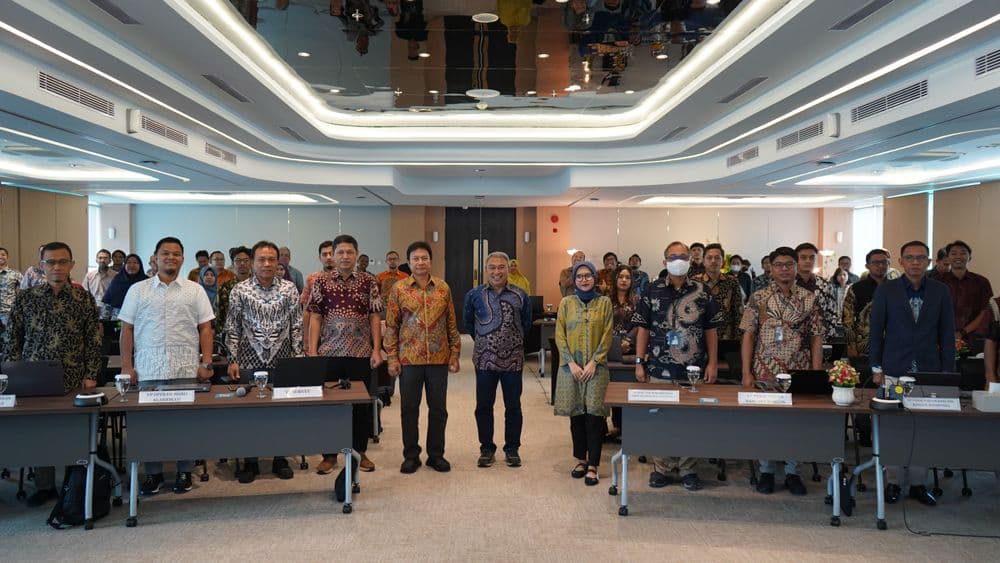
Jakarta, October 29, 2025 — In a continued effort to enhance maritime safety and efficiency, PT Biro Klasifikasi Indonesia (Persero) or BKI organized a workshop titled “Implementation Strategy for BKI Risk Assessment Guidelines” on October 28–29, 2025, at its Head Office in Jakarta.


The two-day workshop, hosted by BKI’s Classification and Statutory Research and Development Division, featured maritime safety experts from the Sepuluh Nopember Institute of Technology (ITS) Surabaya and marked a key step in BKI’s transition toward a modern, risk-based ship classification system.
As Indonesia’s national classification society, BKI plays a central role in ensuring that all vessels meet national and international safety and seaworthiness standards. During the workshop, BKI introduced its Risk Assessment Guidelines (Part 8, Vol. A) — a new framework designed for vessels and floating structures operating in domestic waters, including rivers and lakes. The guidelines emphasize a risk-based approach that enables early identification of potential hazards throughout a vessel’s operational life, allowing for timely and effective preventive actions.
The session also featured the introduction of Dewaruci Risk-Based Assessment (RBA), a digital tool developed by BKI to support shipowners and surveyors in identifying, evaluating, and managing operational risks. The platform enhances the transparency and accuracy of assessments while ensuring that all documentation is recorded digitally.
Around 80 participants from across BKI’s internal divisions took part in the workshop, including representatives from Survey, Design Approval, Business Research and Development, and the Risk Assessment Working Group.
The event was attended by Arief Budi Permana, Director of Classification Business Operations, and Arief Nurtjahjo, Deputy Director of Nusantara Classification Business.
Speakers included:
- Prof. Dr. Ketut Buda Artana, S.T., M.Sc., Department of Marine Engineering, ITS – “Philosophy of Ship Safety Risk Assessment.”
- Dr. Eng. Fadilla Indrayuni Prastyasari, M.Sc., Department of Marine Engineering, ITS – “Familiarization of Risk Assessment Guidelines: Academic Perspective.”
- Sukron Makmun, S.T., M.T., Senior Manager of National Regulation Development and Applications, BKI – “Familiarization of BKI Risk Assessment Guidelines: BKI’s Perspective.”
- M. Irfan, S.T., M.T., together with Dewaruci RBA application vendor – “Socialization and Implementation of the Dewaruci RBA Application.”
The workshop aimed to deepen participants’ understanding of maritime risk assessment concepts and align perspectives across divisions to ensure the effective adoption of risk-based ship classification practices.
The introduction of risk-based classification and digital assessment tools reflects BKI’s broader digital transformation agenda in maritime services. This initiative supports national efforts to promote safe, efficient, and sustainable sea transport while enhancing the global competitiveness of Indonesia’s shipping industry.
Through these developments, BKI reaffirms its commitment to accelerating ship classification processes, improving transparency in technical decision-making, and fostering a stronger safety culture across the maritime sector.